What Happens If You Use a Copyrighted Image?
2026-08-27 · 7 min read
If you use a copyrighted image without permission, the most likely outcome is not a dramatic courtroom battle. It usually begins with a notification: a takedown request from your hosting provider, a copyright strike on your platform account, or a demand letter asking you to pay a licensing fee. Only a small share of cases ever escalate to litigation.
"Using" here covers almost anything you do with someone else's image without a license: posting it on a blog, publishing it on social media, placing it on a product listing, or embedding it in marketing materials. If you did not take the photo, draw the illustration, or obtain a license, assume the default answer is that you need permission.
The stakes are still real. Under U.S. law, an infringer can be liable for damages far larger than the cost of licensing the image would have been, on top of removed content and the fallout that comes with it. This guide walks through what typically happens, what it can cost, and how to avoid finding out firsthand. This is general information, not legal advice; if you receive a legal demand, consult a qualified attorney.
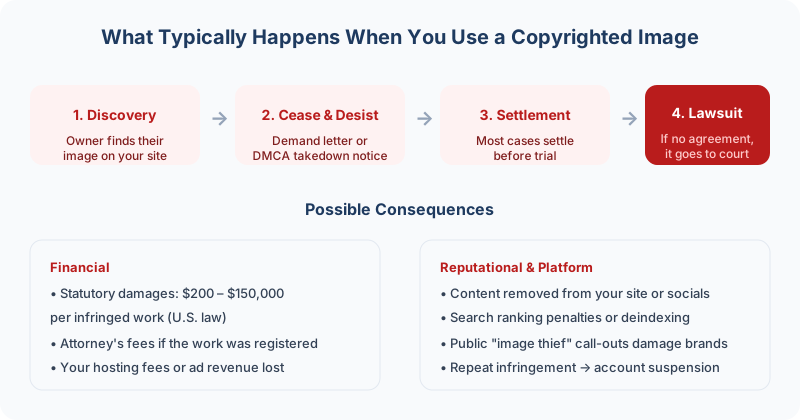
The Typical Timeline
Most image copyright disputes follow a predictable sequence. Understanding it removes much of the uncertainty: the process is more administrative than most people expect.
Step 1: The rights holder discovers the use. Photographers, agencies, and publishers monitor how their images spread online. Some use reverse image search tools — the same technology you can use to trace an image's origin — to find unauthorized copies. Stock photo agencies run automated matching systems, and sometimes a viewer simply recognizes an image and reports it to its owner.
Step 2: A notice arrives. Under U.S. law, the Digital Millennium Copyright Act (DMCA) gives rights holders a formal mechanism: they send a takedown notice to the platform hosting your content, and the platform must remove the material to preserve its own legal protections. You have the right to file a counter-notice if you believe the claim is wrong: a statement, made under penalty of perjury, that the takedown was mistaken. If you file one, the platform may restore the content unless the rights holder files a lawsuit within a set period. Alternatively, or in addition, the rights holder or their attorney may send a cease-and-desist or demand letter directly to you, requesting removal and usually payment of a fee.
Step 3: Negotiation and settlement. This is where most disputes end. For an accidental use, a modest license fee or settlement — commonly in the low hundreds to a few thousand dollars — resolves the matter. Commercial use, repeated infringement, or a history of ignoring notices tends to raise the number.
Step 4: Litigation. If no agreement is reached, the rights holder can file a copyright infringement lawsuit in federal court. Litigation is slow and expensive for both sides, which is why the large majority of cases settle before a verdict — and most never get filed at all.
Financial Consequences
The first question people ask is how much an infringement can cost. Under U.S. law, the answer depends heavily on whether the image was registered with the U.S. Copyright Office before the infringement.
For registered works, a court may award statutory damages of $200 to $150,000 per work, without the plaintiff having to prove actual financial harm. Courts choose a figure within that range based on factors including whether the infringement was willful; deliberate use after warnings can push awards toward the upper end, while the lower end of the range generally applies to infringers who reasonably believed their use was lawful.
For unregistered works, the plaintiff is limited to actual damages — their provable losses plus your profits attributable to the use — which are often difficult to establish. Registration also lets a court award attorney's fees to the prevailing party under U.S. law, and in practice legal fees often rival or exceed the damages themselves. That is why even a "small" claim can be expensive to defend.
Most demand letters are resolved for far less than the theoretical maximum. The statutory figures still matter, though, because they set the negotiating ceiling — a rights holder who can point to the $150,000 figure is negotiating from a strong position.
A full breakdown of how courts calculate awards is a topic of its own. The practical takeaway here is simple: your exposure can be many times the cost of licensing the image in the first place.
Non-Financial Consequences
Money is not the only cost of using a copyrighted image.
- Content removal. The page, post, or video containing the image typically comes down first. If that content carries ads or drives revenue, the loss is immediate.
- Platform penalties. Platforms enforce their own repeat-infringer policies. On YouTube, three copyright strikes terminate a channel. Social platforms and ad networks can suspend accounts that accumulate takedowns, and losing an established account can outweigh any monetary settlement.
- Search engine impact. When a page is taken down, its rankings disappear with it. Regaining lost positions can take months, and a site that repeatedly publishes infringing content may lose trust with search engines more broadly.
- Reputation damage. Clients, employers, and audiences notice when content is pulled or when a dispute becomes public. For freelancers and agencies whose work depends on trust, a visible copyright complaint can hurt more than the settlement itself, and for creators, a strike against an account can dampen reach even after it expires.
Does Ignoring It Make It Worse?
Yes, in most cases. A notice does not expire because you ignore it, and silence rarely makes a rights holder go away — it often pushes them toward the next step, which is escalation.
Ignoring a notice can also directly increase your legal exposure. Under U.S. law, willfulness is a central factor in setting statutory damages. A paper trail showing that you received notices and kept the image up strongly supports a finding of willful infringement, which can push an award toward the high end of the statutory range.
A measured response is almost always better:
- Verify the claim. Confirm whether the notice refers to an image you actually use and whether you hold a license or permission for it. Our guide on how to check image copyright walks through confirming an image's status.
- Remove the image while you assess. Taking it down does not admit liability, and it stops the infringement from continuing.
- Respond within DMCA deadlines if the notice went through a platform. File a counter-notice only if you genuinely believe the claim is wrong.
- Get legal advice before responding to a demand letter. Do not agree to pay or sign anything before you understand the claim.
- Never ignore court documents. Failing to respond to a lawsuit can result in a default judgment against you.
How to Avoid This Entirely
The best way to win a copyright dispute is to never be in one.
Verify every image before you publish. Spend a few minutes checking an image's copyright to learn where it came from and who holds the rights. If you cannot trace it, do not use it.
Use images from clearly licensed sources. Collections covered in our guide to free image sources publish their license terms up front, which removes most of the guesswork. Brushing up on copyright basics — how licenses work and what fair use actually covers — makes these decisions routine.
Keep records of permission. Save screenshots of license pages, receipts, and attribution notes when you download an image. If a claim arrives months or years later, those records can turn a dispute into a one-email response.
When in doubt, replace the image. The cost of a licensed alternative is trivial compared with even the smallest settlement. Make verification part of your publishing checklist rather than a one-off effort — teams that check every image up front rarely receive notices at all.
Avoid the Problem Before It Starts
The cheapest copyright dispute is the one that never begins. Before you publish, run your images through our image copyright checker — it identifies where an image originated and flags copyright risk in seconds. New users get 3 free checks on sign in.